|

Trump Launched War On Iran With No Strategy — Now Chaos And Disaster Unfold
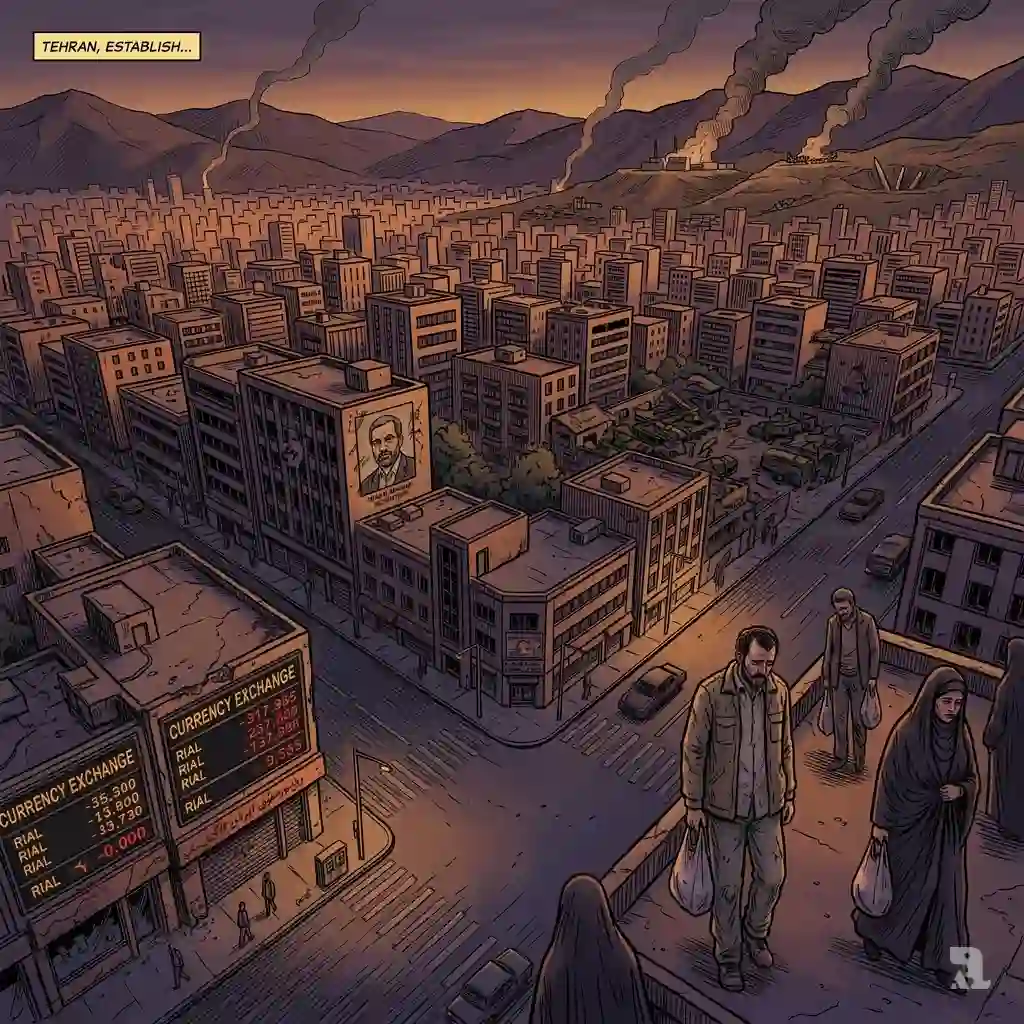
Aerial view of Tehran at dusk showing economic exhaustion. Crumbling currency exchange boards display plunging rial values. Smoke rises from military installations hit by airstrikes. Iranian civilians in worn clothing walk with their heads down, carrying empty shopping bags, their expressions ones of quiet grief and resignation.

Over past years, US sanctions and Israeli military strikes weakened Iran significantly — currency plunged, leaders and scientists killed, aerial defenses destroyed, missile stockpiles depleted, and proxies like Hamas and Hezbollah degraded.
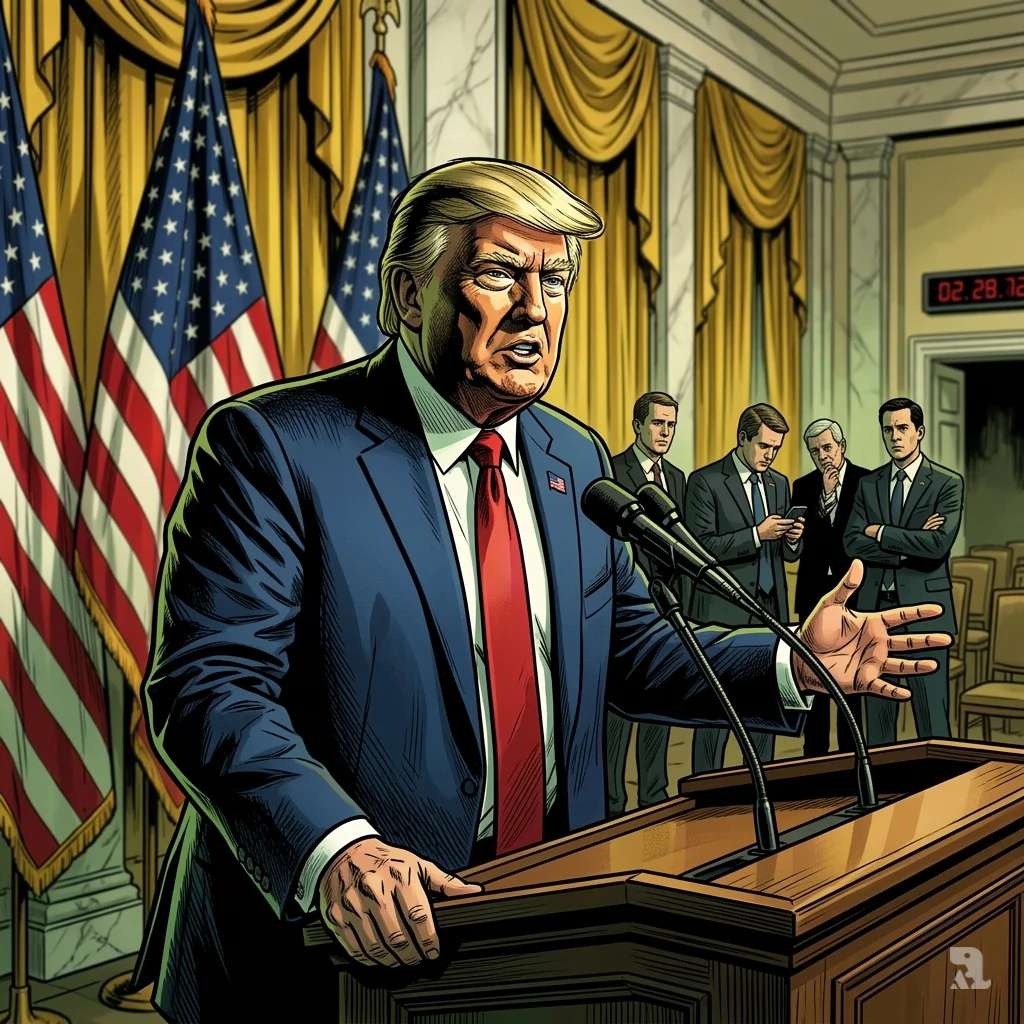
Donald Trump stands at a presidential podium, his face in stark split-lighting that suggests instability. He grips the edge with white-knuckled hands. Behind him, a small cluster of aides in suits shift uncomfortably, their anxious body language and tense expressions undermining his aggressive certainty.

2.5 weeks ago, Trump launched a war on Iran without revealing any strategy. He promised Iranians freedom, demanded unconditional surrender, and claimed he must approve Iran’s next leader — with zero plan to achieve it.
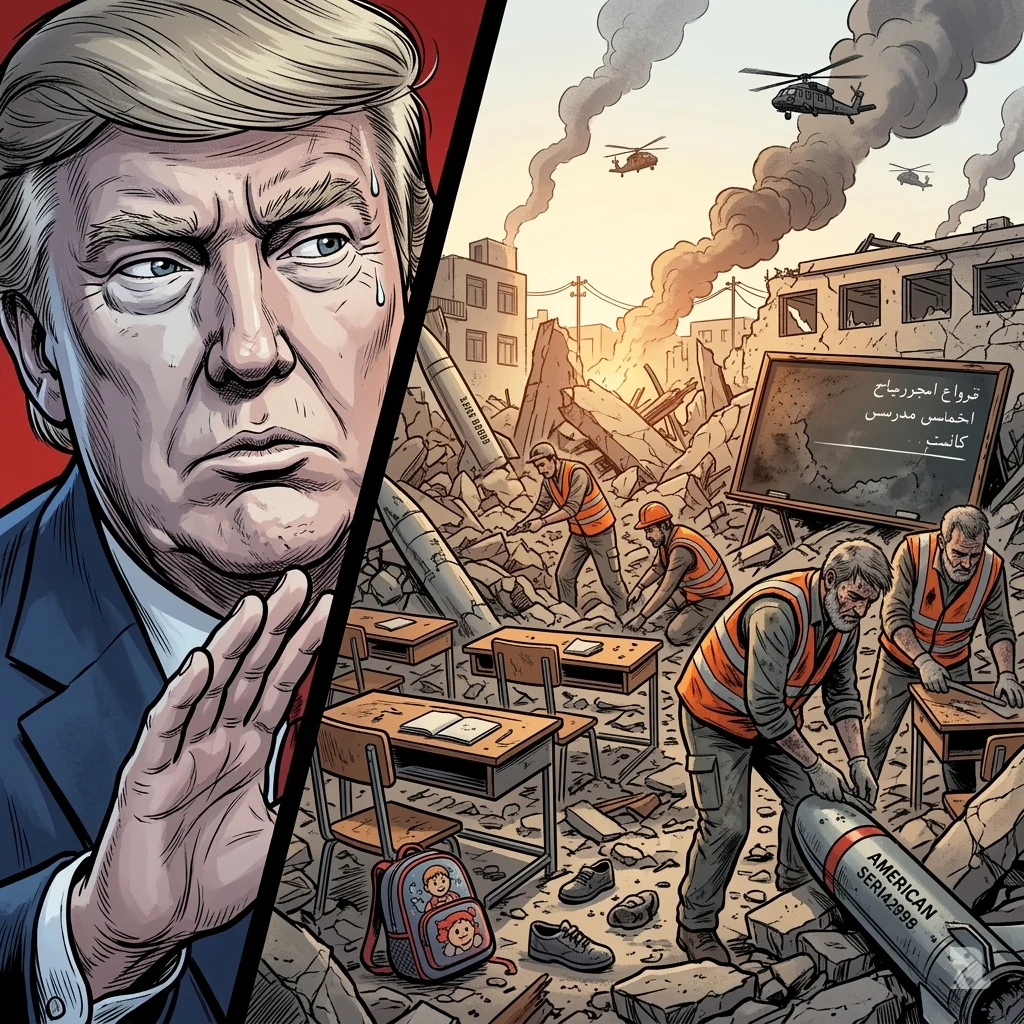
Split image juxtaposing a close-up of Trump's stressed, evasive face with a wide shot of a destroyed school in Iran. In the rubble, small desks, a child's backpack, and scattered shoes are visible. Rescue workers in orange vests dig through debris, one holding a shoe with a grief-stricken expression.

The war exposed Trump’s chaotic leadership — a tiny circle of aides, contradictory public claims, and a deliberate attempt to mislead the world about dozens of Iranian schoolchildren killed by a mistargeted American missile.
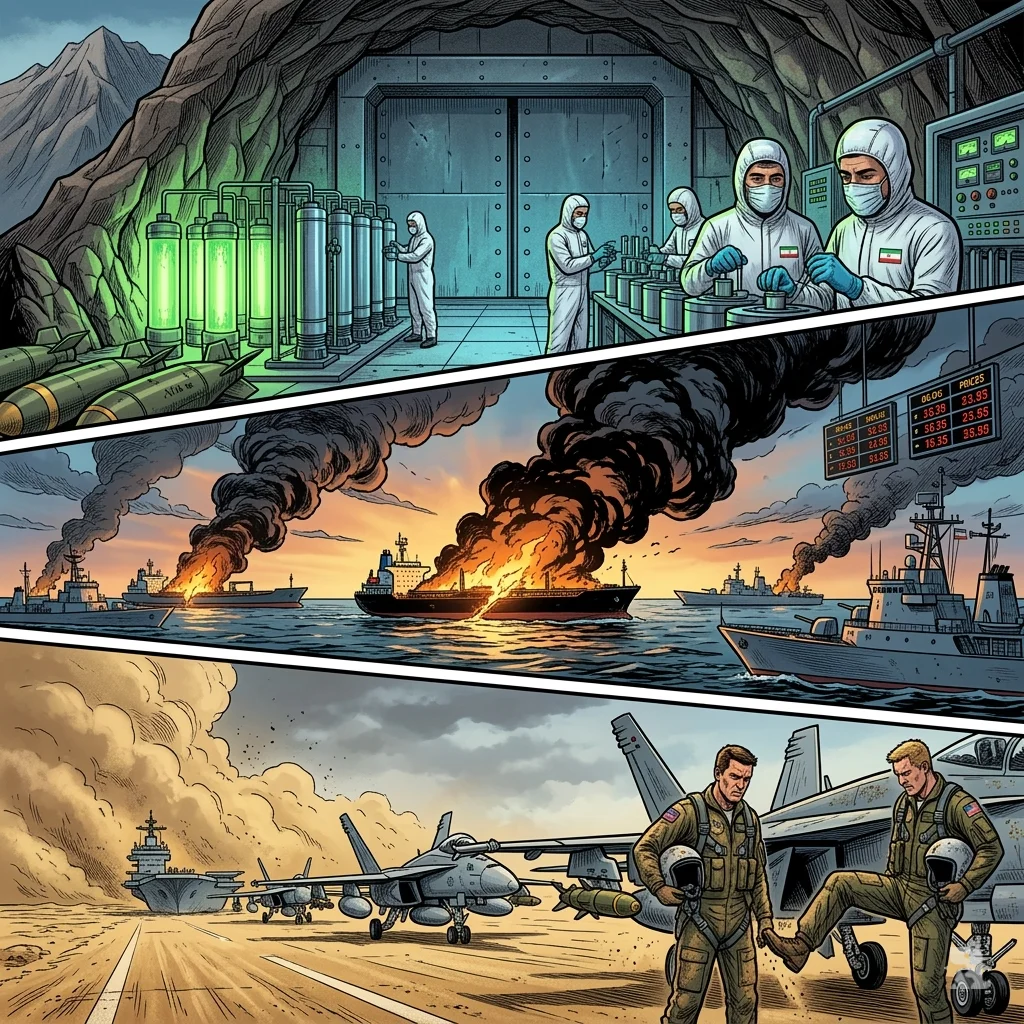
A triptych showing three simultaneous strategic crises. Top: Iranian technicians work calmly inside a fortified underground uranium facility. Middle: The Strait of Hormuz is choked with burning oil tankers. Bottom: Frustrated American fighter pilots return from a failed bombing mission as a sandstorm approaches.

3 major strategic crises surfaced. Air power alone cannot topple governments. Iran’s enriched uranium stockpile sits intact under mountains near Isfahan. And oil prices surged over 40% after the Strait of Hormuz was choked.
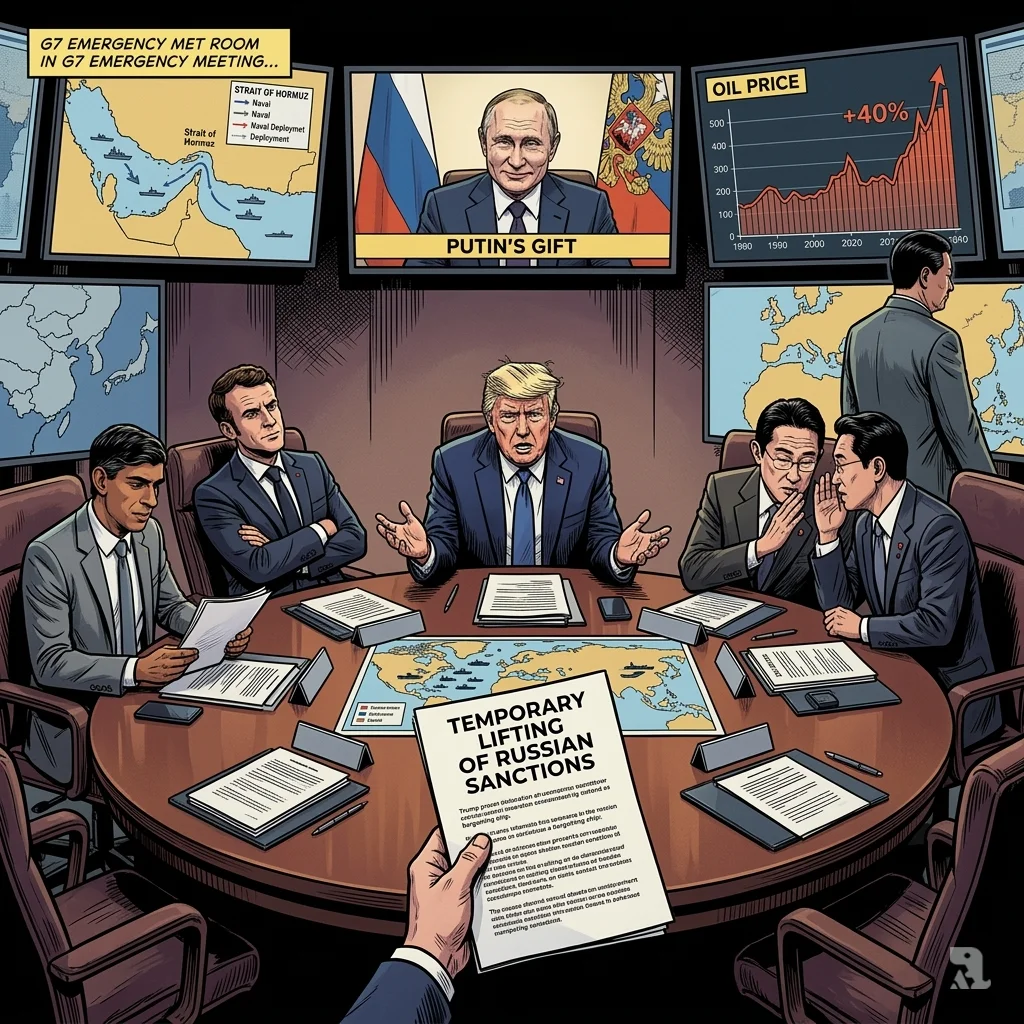
An isolated Donald Trump sits at an international conference table, hands open in a desperate, pleading gesture. World leaders around him display resistance: a British official looks away, a French counterpart crosses his arms, and Asian leaders exchange skeptical glances. A document proposing a Russian sanctions lift is visible in Trump's hand.

Desperate, Trump temporarily lifted oil sanctions on Russia — a gift to an enemy. He then pleaded with Britain, France, Japan, South Korea, and even China to send naval forces to protect the strait.
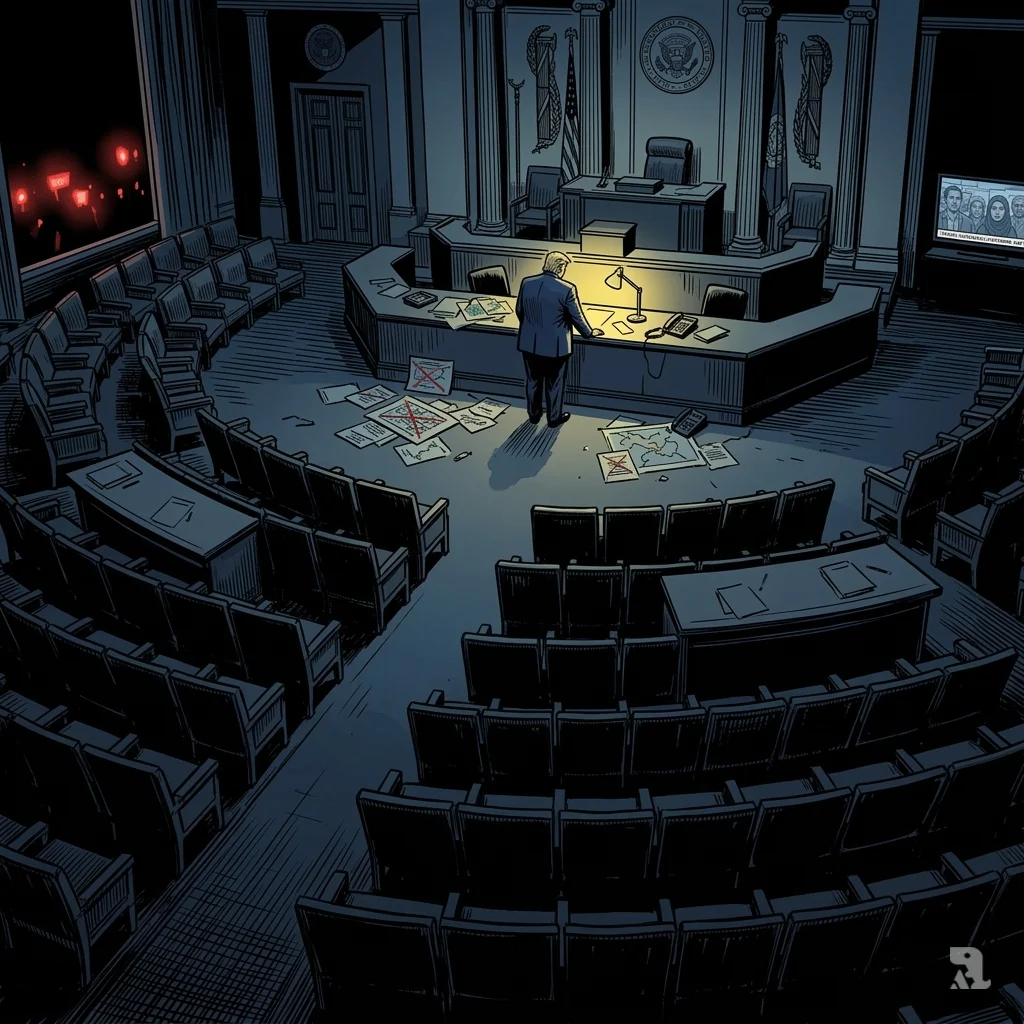
An extreme wide shot emphasizing the vast emptiness of a congressional chamber. Donald Trump stands alone, a small, isolated silhouette with his back partially turned. The rows of seats are dark and empty. The architecture of American democracy looms as a silent witness to the consequences of war launched without foundation.

No congressional approval was sought for the war. No planning with allies. No credible rationale for the American people. The harsh reality — Trump started a war with absolutely no idea how to end it.
A quick visual update that saves you 10 minutes of reading – Source: The New York Times

Similar Posts