|

Oil Faces Weekly Drop as US-Iran Talks Drag and OPEC+ Looms
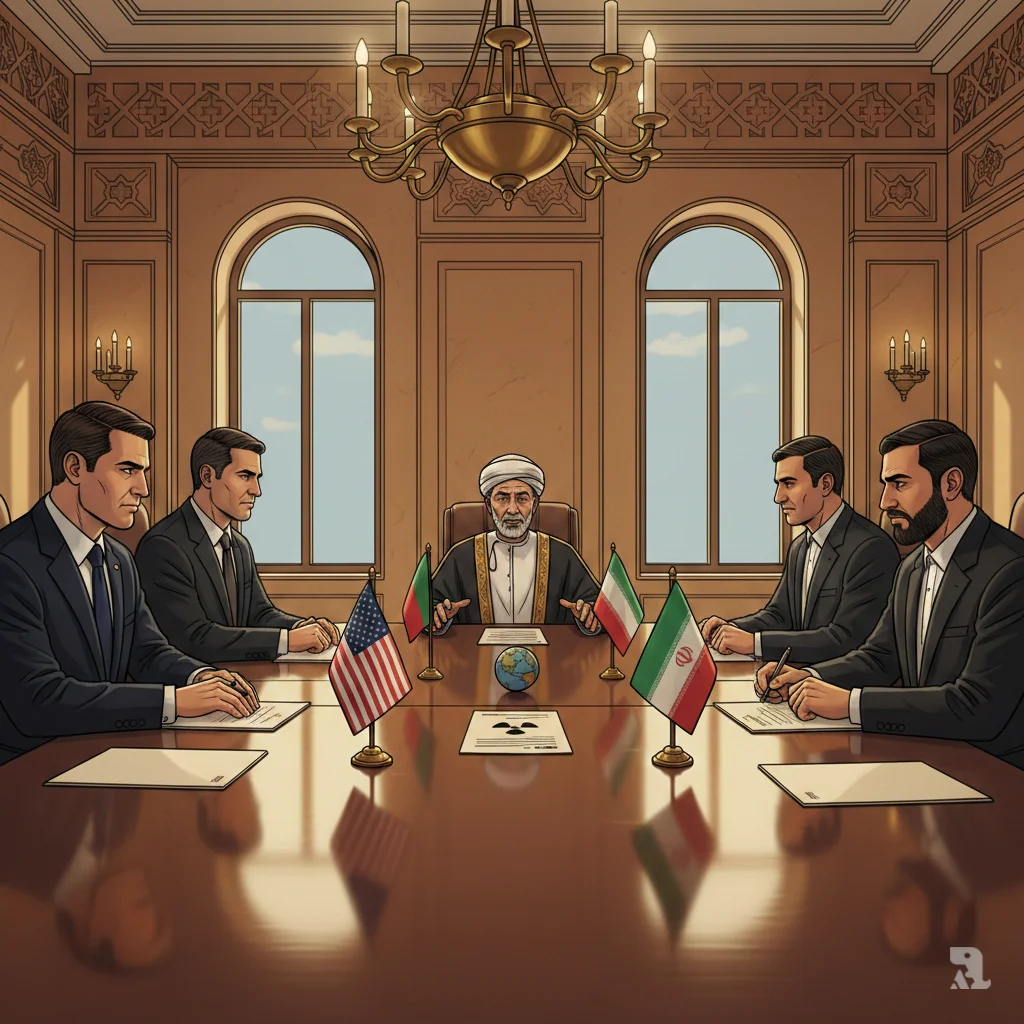
A wide shot of a formal diplomatic meeting room in Oman. US and Iranian delegations sit opposite each other at a long, polished wood table, separated by an Omani mediator. Small American and Iranian flags sit on the table before each delegation, with documents visible. The room features sandstone-colored walls with geometric patterns and arched windows. The atmosphere is tense and formal.

The United States and Iran began nuclear talks in Oman. Washington demanded zero uranium enrichment and full transfer of 60% enriched uranium to the U.S., setting strict conditions and creating a tense, high-stakes negotiation atmosphere.

A close-up of a trading terminal screen showing a sharp spike in oil prices. A bright green candlestick on a dark chart surges upward, indicating a price jump of over a dollar. A news ticker displays fragments like "STALLED" and "URANIUM DEMAND." The faint, alarmed reflection of a trader in a white shirt is visible on the glass screen, highlighting the market's reaction to stalled negotiations.

Oil prices jumped more than $1 per barrel after reports said talks had stalled. The U.S. repeated its demand for zero enrichment and transfer of 60% uranium, shaking markets and raising fears of possible U.S. military action.
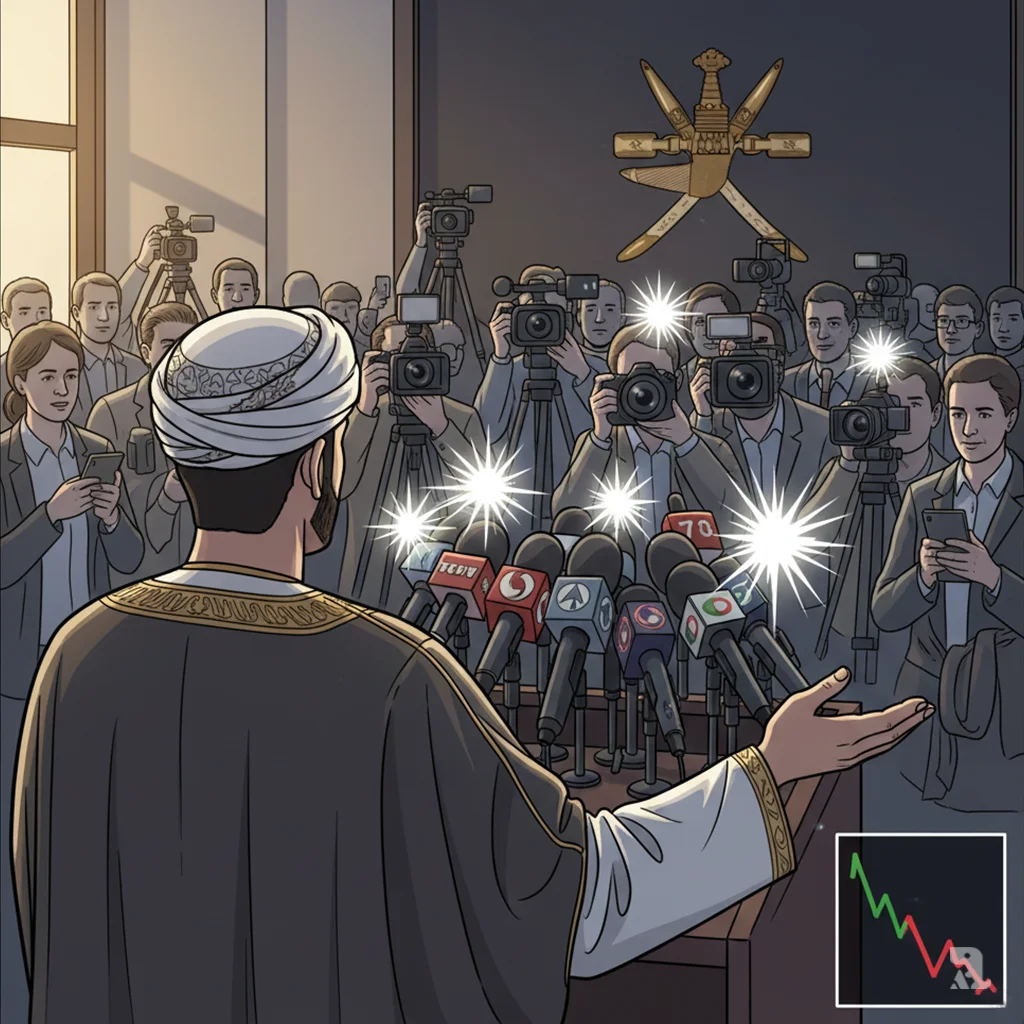
An over-the-shoulder shot of an Omani mediator in traditional white attire, gesturing calmly with an open palm toward a podium of international press microphones. Camera flashes burst from journalists and photographers in the background. A small overlay in the corner shows an oil price chart beginning to curve downward, representing easing prices after his statement.

Oil prices eased after the Omani mediator said progress was made. But analysts warned time was short before Trump’s March 1–6 deadline, and the risk of limited U.S. military strikes still remained.
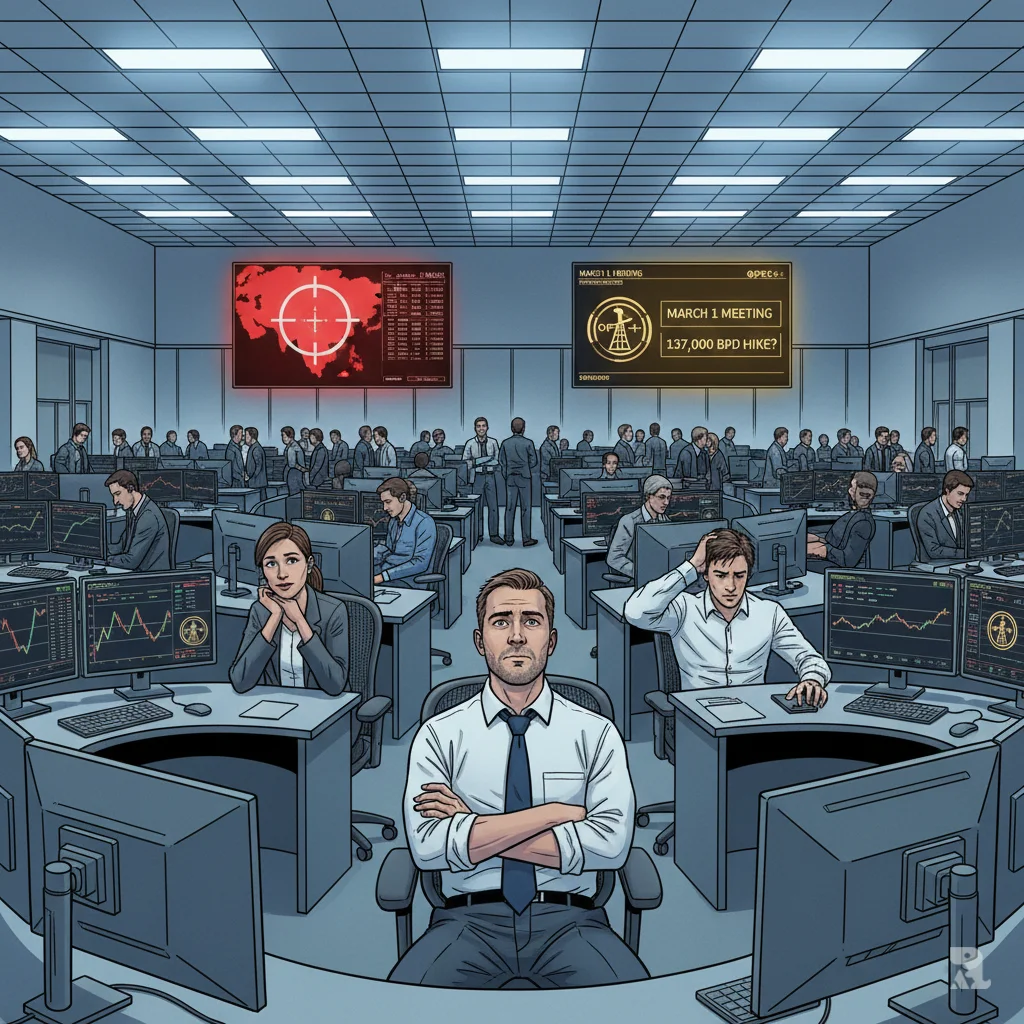
A wide shot of a busy commodities trading floor. Traders sit at desks with multiple screens displaying flat price charts. A central trader leans back with his arms crossed, looking contemplative. On the far wall, two large screens show the opposing forces: one displays a map of Iran with a military crosshair, the other shows the OPEC+ logo and meeting details.

Analyst June Goh said traders were in “wait-and-see” mode before the weekend. Rising Iran tensions and a possible OPEC+ production hike Sunday created two opposing forces, keeping oil markets tense and uncertain.
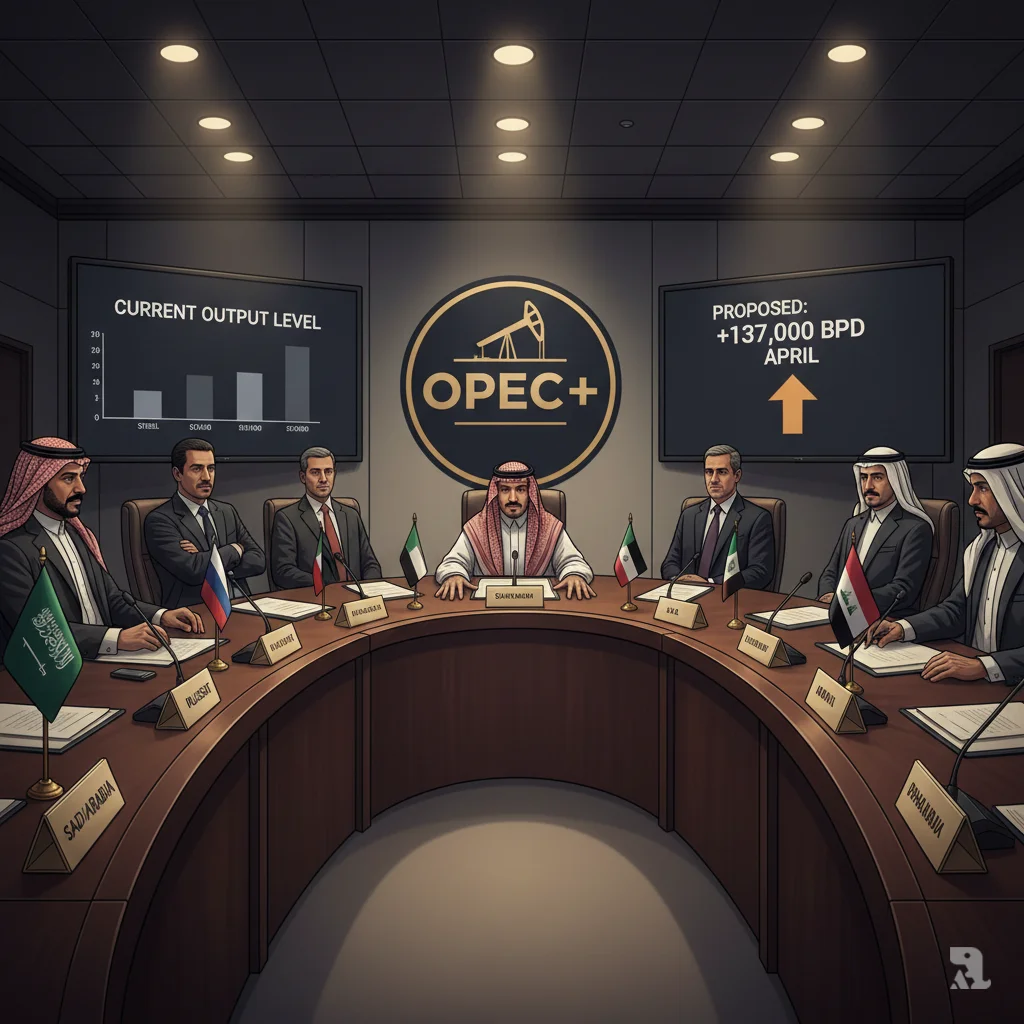
A dramatic low-angle shot of a curved OPEC+ conference table. Delegate nameplates, microphones, and small flags of member nations like Saudi Arabia and Russia are visible. The Saudi delegate's hands are placed firmly on the table. In the background, a large OPEC+ logo is flanked by digital displays showing data on a proposed production hike of 137,000 barrels per day.

OPEC+ was set to meet on March 1 to consider raising output by 137,000 BPD for April, after pausing hikes earlier. More supply could increase pressure on a market already facing serious geopolitical risks.
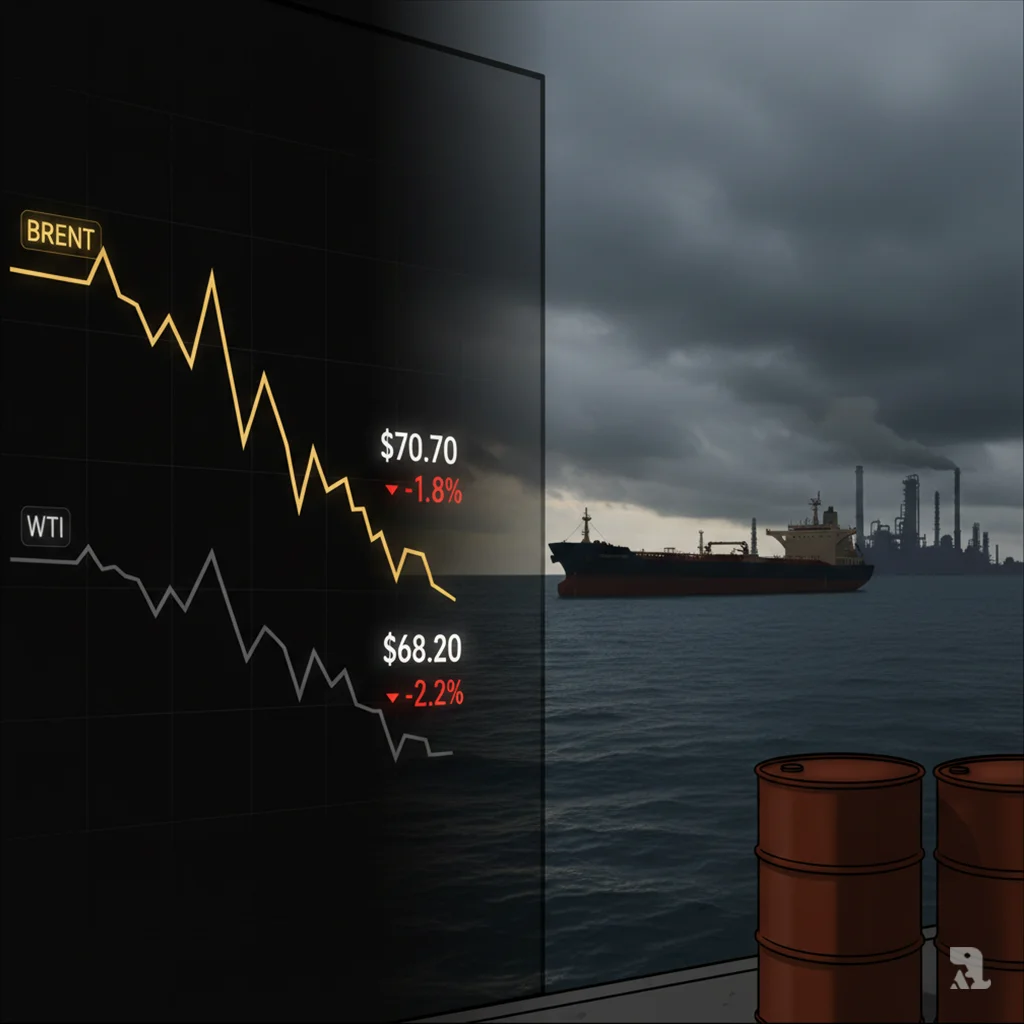
A split composite image. On the left, a large dark chart shows the weekly decline of Brent and WTI crude oil prices, with red downward arrows indicating a 1.8% and 2.2% drop. The right side transitions into a somber scene of a stationary oil tanker at sea and a refinery silhouette under a heavy, overcast sky, symbolizing market uncertainty.

For the week, Brent crude fell 1.8% to $70.70, while WTI dropped 2.2% to $68.20, reversing earlier gains. With the OPEC+ meeting Sunday and Trump’s March 1–6 deadline near, markets face major uncertainty
A quick visual update that saves you 10 minutes of reading – Source: Reuters

Similar Posts