
Is the UK Royal Navy Ending Traditional Helicopter Thinking?
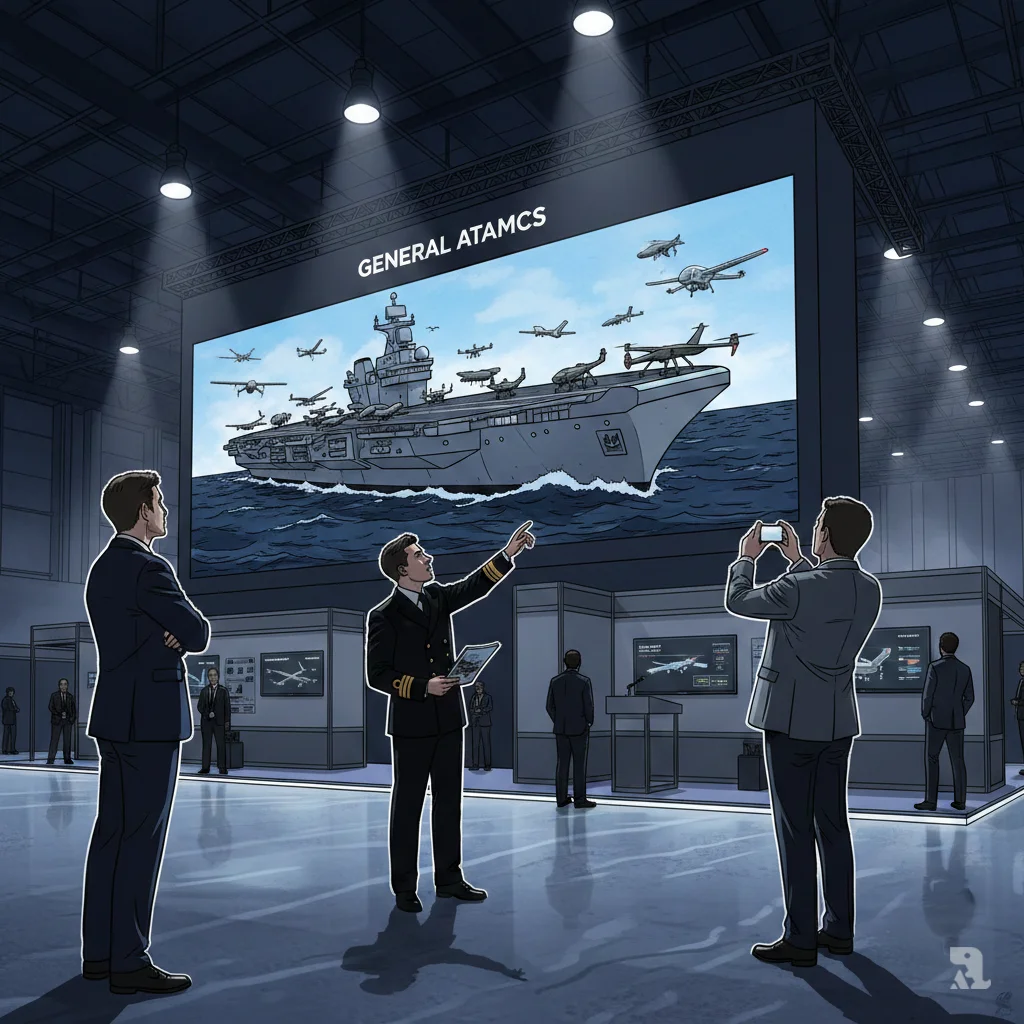
At the Farnborough International Airshow 2024, defence officials and Royal Navy personnel examine a large concept display by General Atomics. The artwork depicts a Queen Elizabeth-class aircraft carrier with an entirely unmanned airwing on its flight deck.

At Farnborough Airshow 2024, General Atomics presented artwork of a Queen Elizabeth-class carrier operating a fully unmanned future airwing. The bold concept quickly drew attention inside UK defence circles.
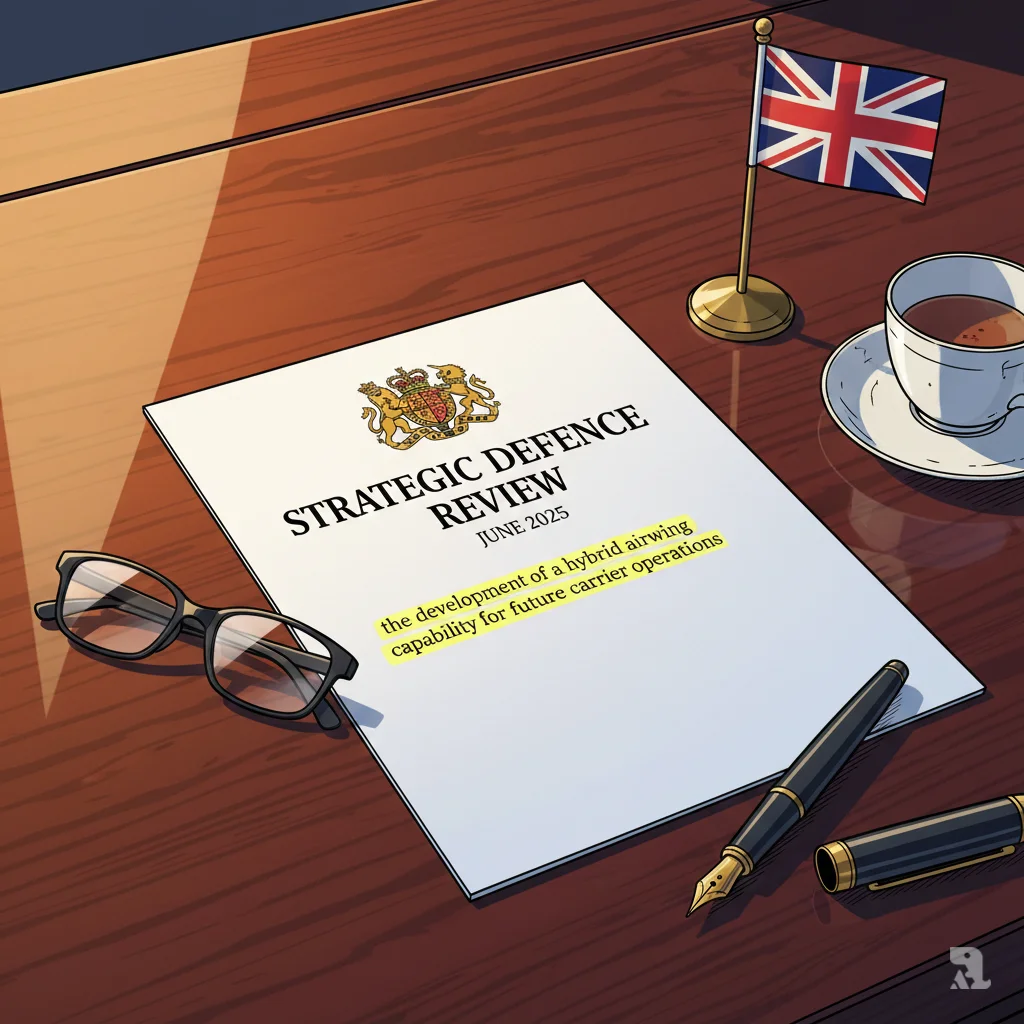
The UK's Strategic Defence Review document from June 2025 lies on a ministerial desk. The cover features the Royal Coat of Arms. Nearby, a fountain pen, reading glasses, a Union Jack flag, and a tea cup suggest a signing ceremony has just concluded.

In June 2025, the UK released its Strategic Defence Review, officially supporting a hybrid airwing combining crewed aircraft with autonomous and remotely piloted systems, embedding the strategy into formal defence planning.
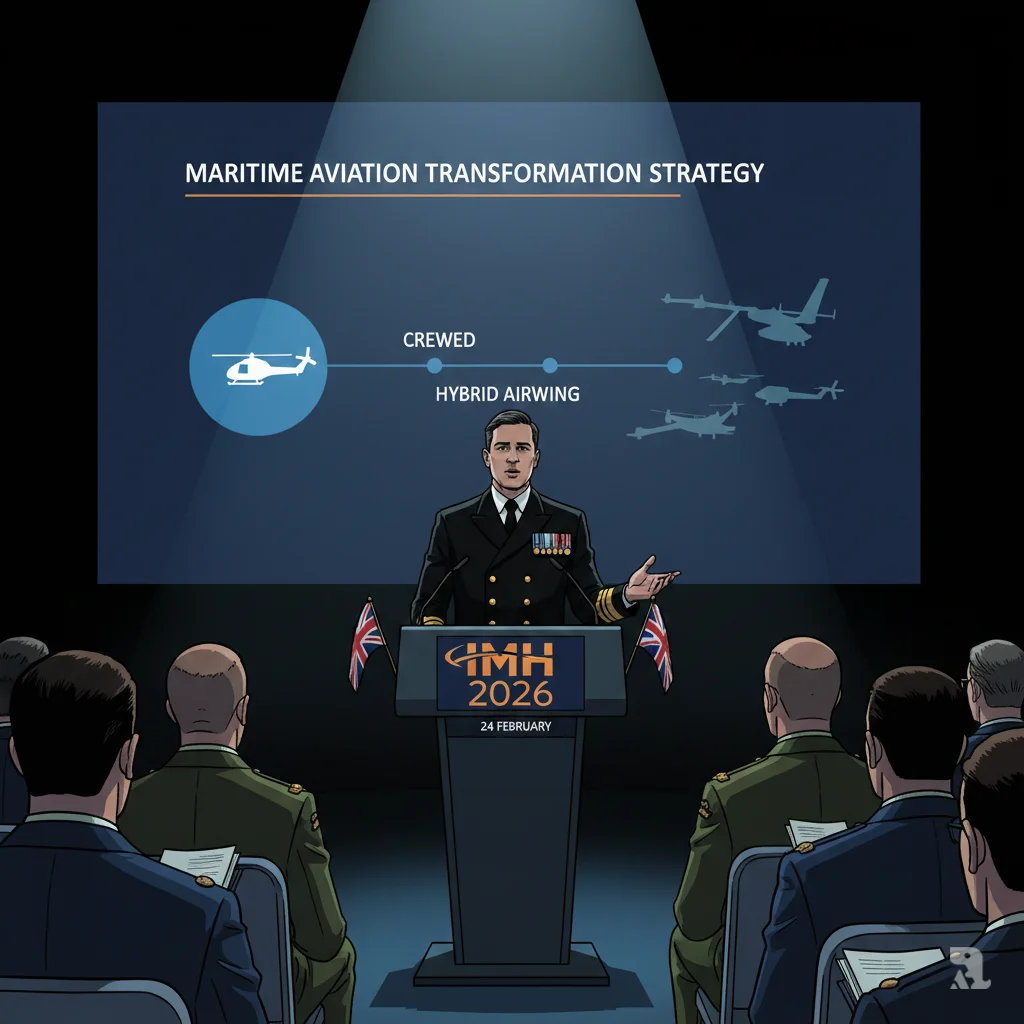
A Royal Navy official speaks at the IMH 2026 conference podium in London. A presentation screen behind them displays the title "Maritime Aviation Transformation Strategy" and a timeline graphic showing the shift to a hybrid airwing.

At IMH 2026 in London on 24 February, a Royal Navy official confirmed the strategy is now central to defence planning, stating clearly: “Uncrewed where possible, crewed where necessary.”
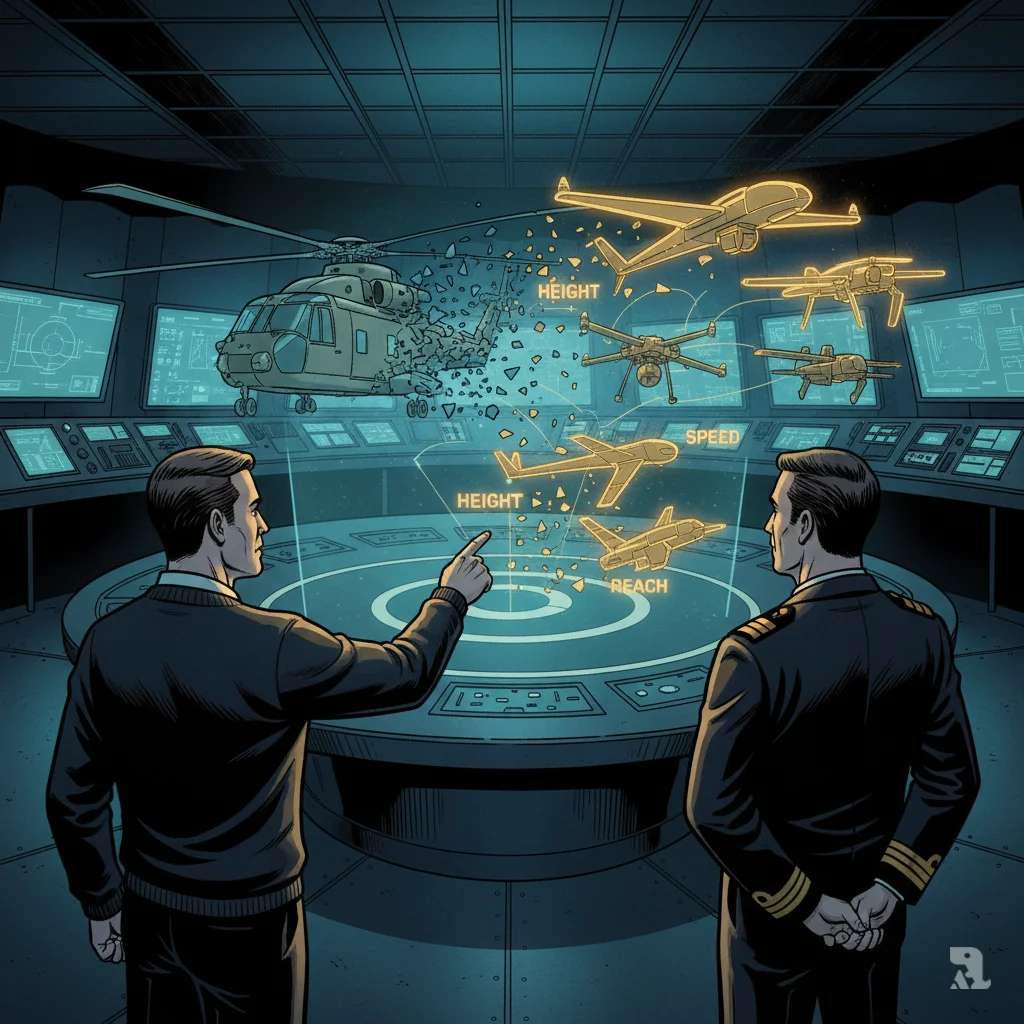
In a darkened naval command center, two Royal Navy officers study a holographic projection. The hologram shows a traditional helicopter dissolving into fragments, from which new fixed-wing and rotary-wing drones emerge, with text labels for "Height," "Speed," and "Reach."

The Royal Navy is moving away from the old “successionist” mindset of replacing aircraft like for like. Instead, it focuses on effects, using air power’s height, speed, reach to deliver stronger capabilities.
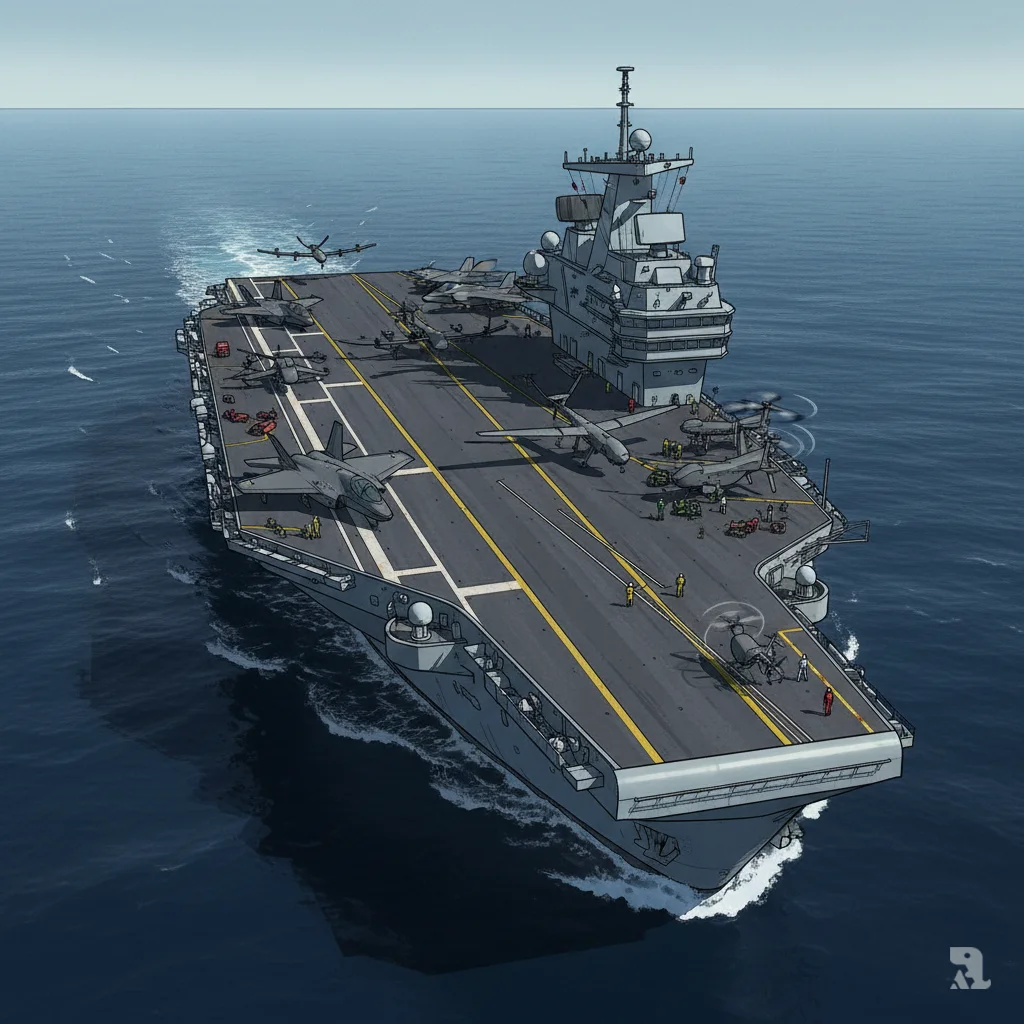
Aerial view of a Queen Elizabeth-class aircraft carrier at sea. Its flight deck is a mix of traditional F-35B fighter jets, fixed-wing drones, unmanned helicopters, and a launching micro-drone. Deck crew in coloured jerseys work around the aircraft.

The SDR calls for a hybrid airwing on Queen Elizabeth-class carriers, where crewed jets operate alongside fixed-wing drones, unmanned helicopters, and autonomous reconnaissance systems on the same deck.
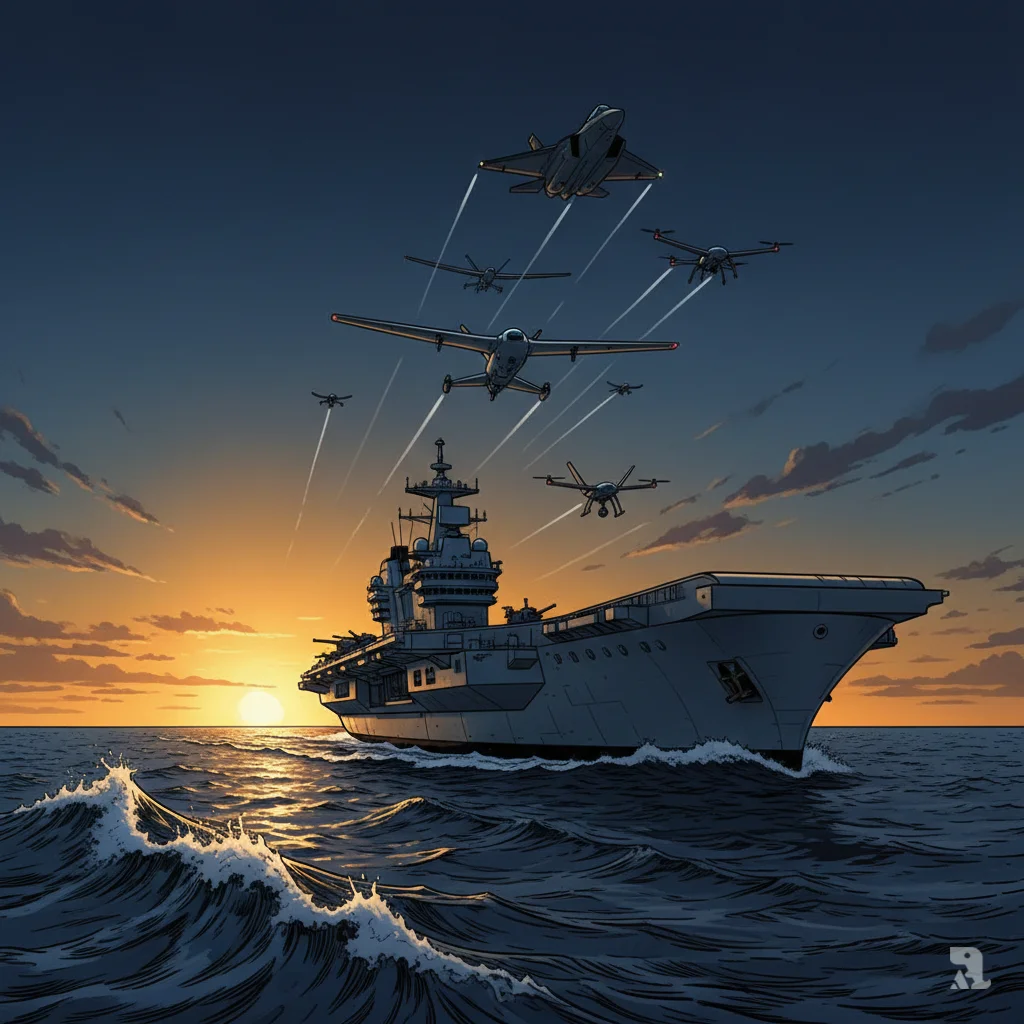
A Queen Elizabeth-class carrier sails toward a golden sunset horizon. Above the ship, a formation of aircraft flies in unison, including an F-35B jet flanked by fixed-wing and rotary-wing drones, silhouetted against the dramatic sky.

Progress is clear, but work continues. The Royal Navy is building an integrated hybrid airwing, guided not by platform loyalty but by what air power’s height, speed, reach can achieve.


A quick visual update that saves you 10 minutes of reading – Source: Janes

Similar Posts