Trump Says Crisis Over — But Are Prices Really Falling?
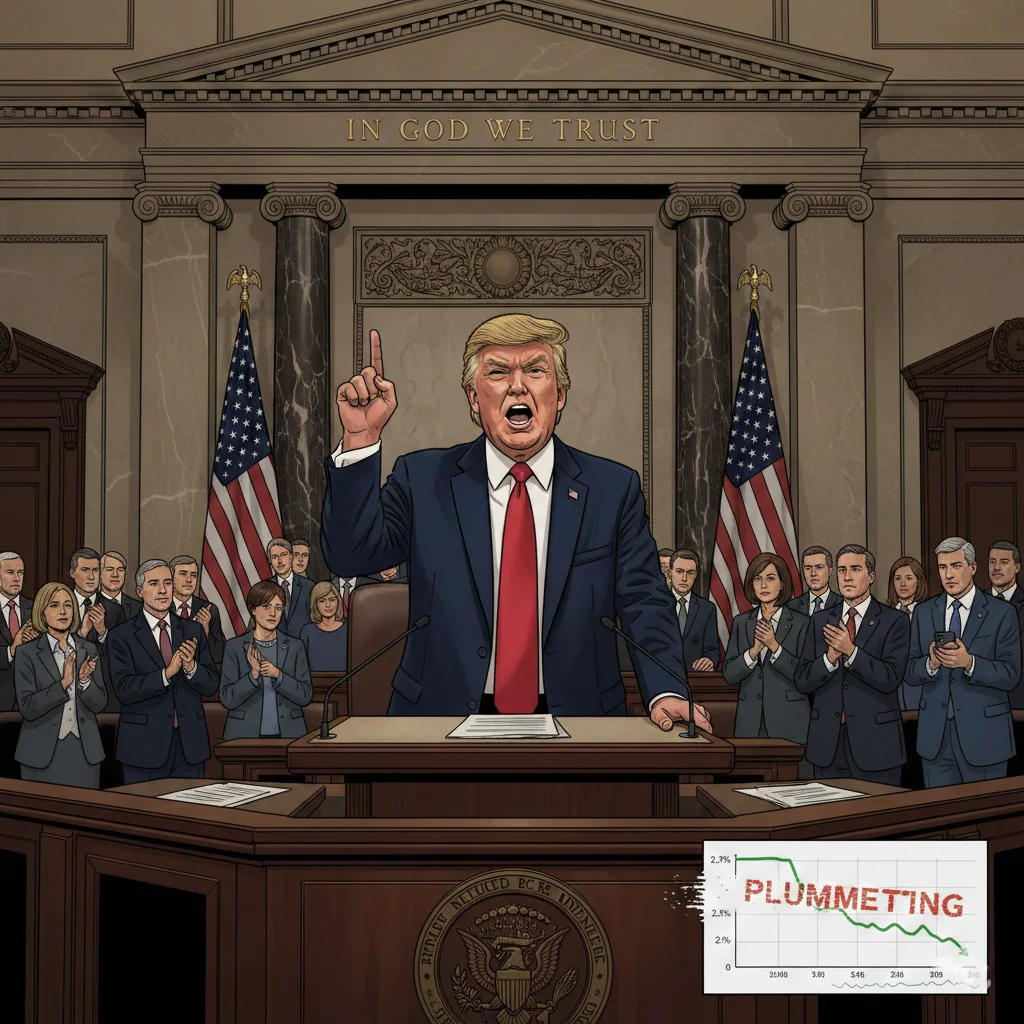
President Trump stands at the Speaker's rostrum during the State of the Union address, pointing his finger emphatically as he declares the affordability crisis over. A small data graph in the corner shows inflation dipping slightly but cumulative prices remaining high, contradicting his claim of plummeting costs.

In his 2026 State of the Union, Donald Trump said the affordability crisis was over and prices were “plummeting.” He blamed Democrats for past costs. But inflation only eased to 2.4%, not the big cuts he promised.
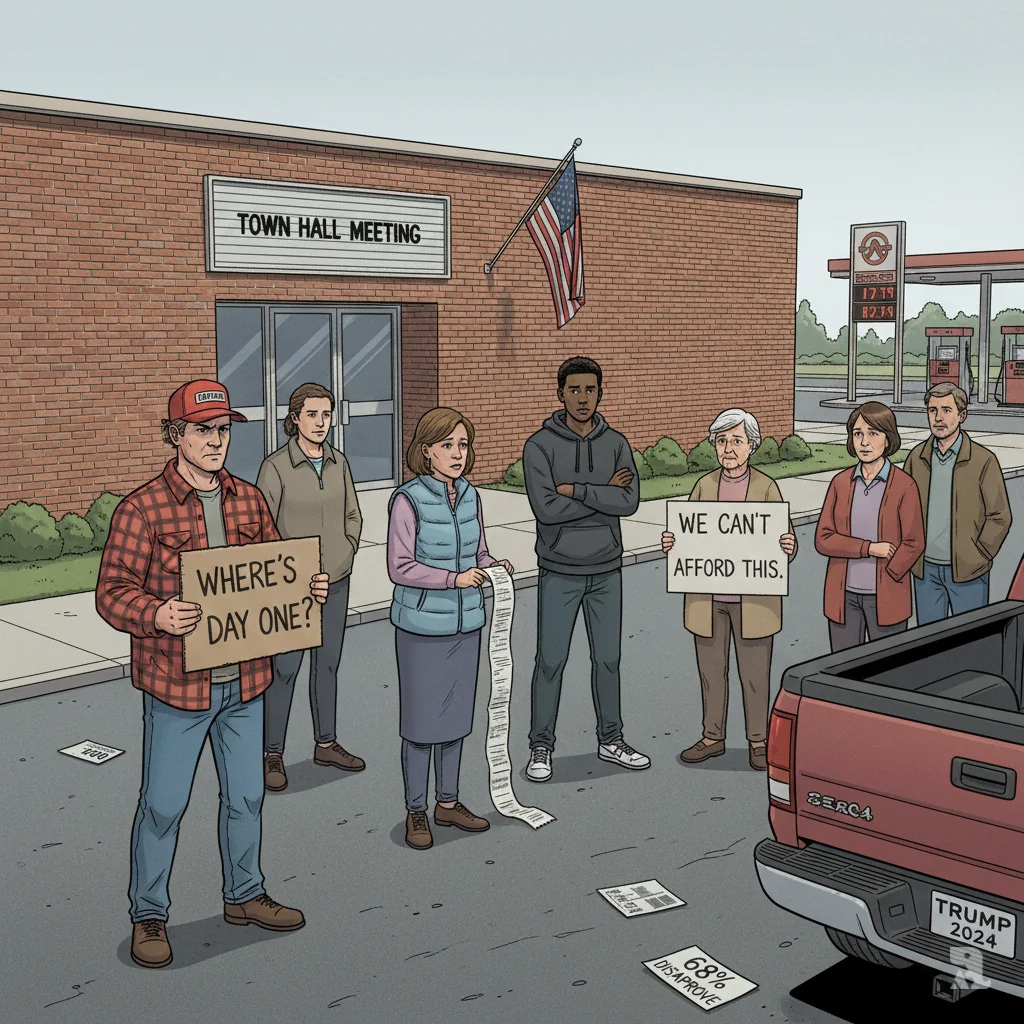
A diverse group of frustrated voters, including a man in a red MAGA-style cap, gather outside a community center. They hold signs reading "WE CAN'T AFFORD THIS" and "WHERE'S DAY ONE?", expressing anger and disillusionment over high living costs and broken promises.

Polls show many voters — including some Trump supporters — blame him for high living costs. Even after admitting in 2024 that lowering prices is hard, he promised day-one relief. Consumers say that relief never came.
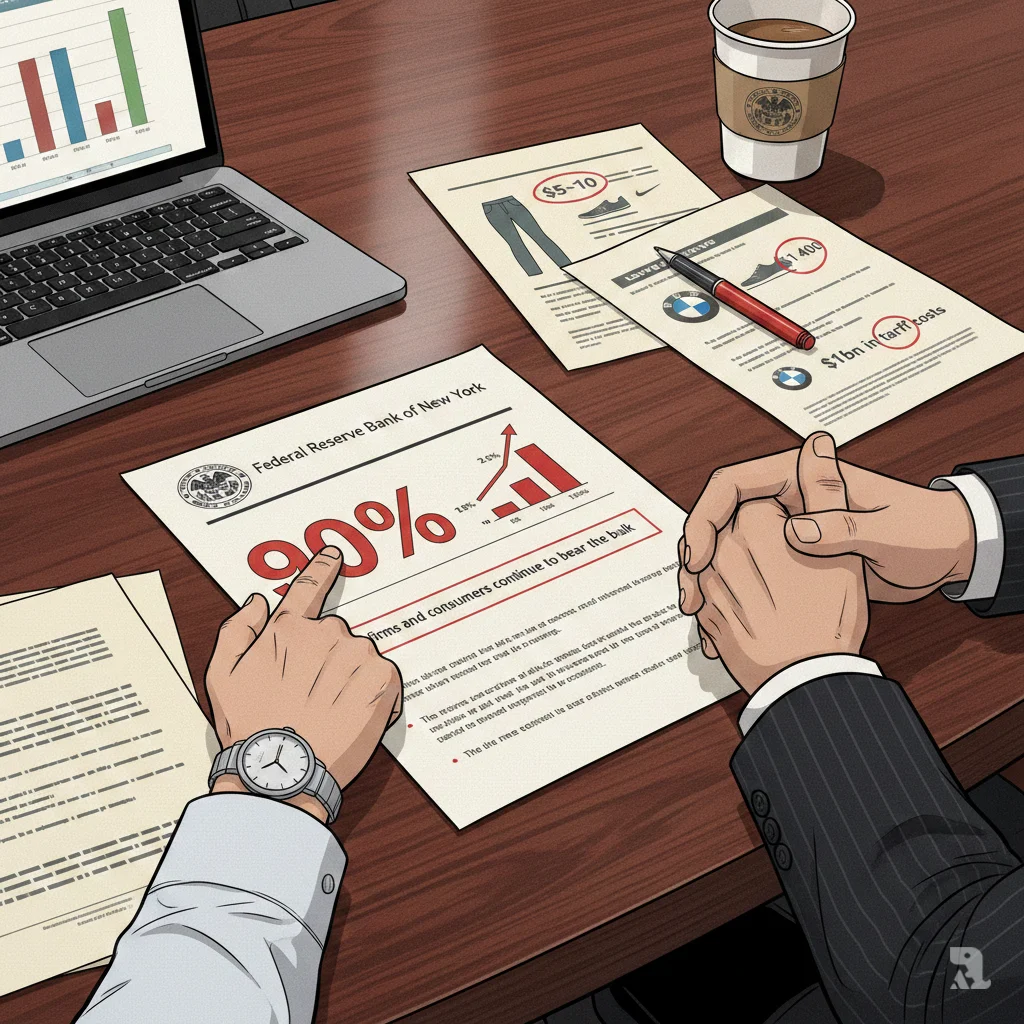
A tight close-up on a Federal Reserve report on a polished table. A hand in a white shirt points to a highlighted figure showing "90%", indicating that US consumers bear the burden of tariff costs. Other documents and a red pen lie nearby, with clasped hands visible at the frame's edge.

A New York Fed report found 90% of tariff costs hit US firms and consumers. Tariff rates rose from 2.6% to 13%. Brands like Levi’s, Nike, BMW and others announced price hikes.
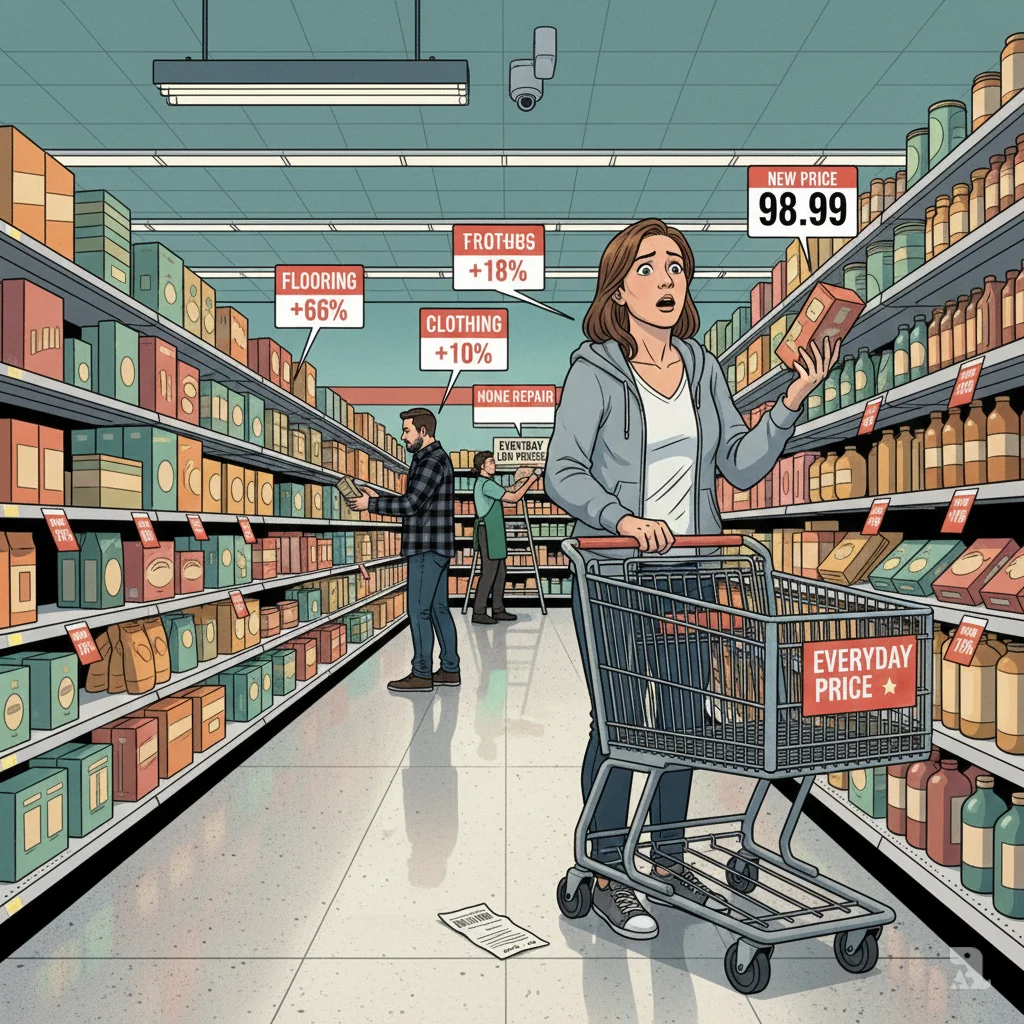
In a brightly lit supermarket aisle, a female shopper stares with shock at a price tag. Floating data callouts show price increases for flooring (66%) and clothing (18%). In the background, another shopper puts an item back on the shelf, unable to afford it.

Harvard’s price tracker showed retail jumps: flooring +66%, clothing +18%, home repair +10%. Germany’s Kiel Institute said 96% of tariff costs fell on US consumers. More hikes are planned for 2026.
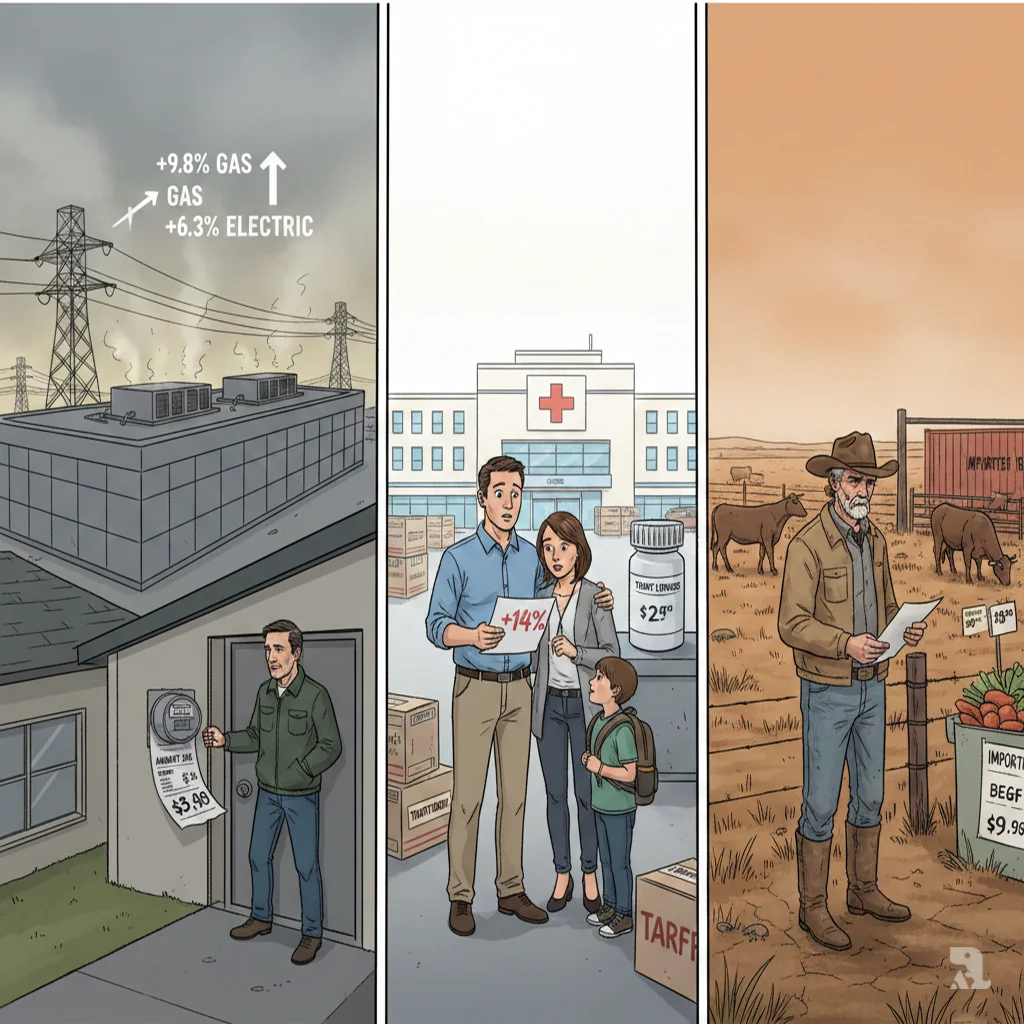
A panoramic view splits to show three simultaneous crises: a massive data center towering over a small house with a high utility bill; a family at a hospital reading a health insurance notice showing a 114% spike; and a rancher in a drought-stricken field holding a tariff notice with imported beef in the background.

Beyond tariffs, costs keep rising. Natural gas increased 9.8%, electricity 6.3%. Health premiums may jump 114%. Lower US cattle supply forced costly imports. Economists call it a deep “knot” with no quick fix.
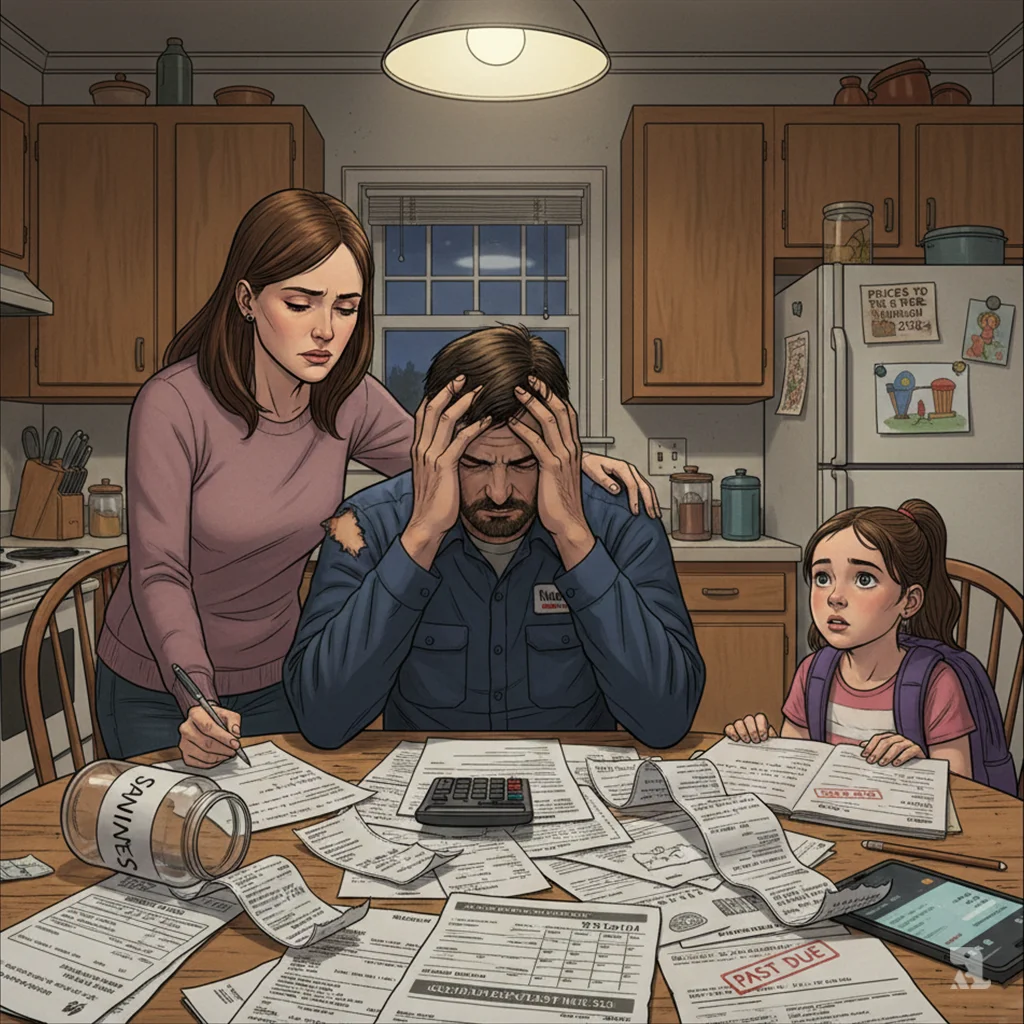
A working-class family sits at their kitchen table, surrounded by piles of bills and financial statements. The father buries his head in his hands in despair while his wife places a hand on his shoulder. An empty, tipped-over savings jar sits on the table as their daughter looks on with worry.

Economists warn no relief is coming. Over 600 business leaders plan price hikes through 2026. Wages stay flat while consumer debt grows. As Pancotti said, “Pocketbooks have taken a beating — the coffers are spent.”

A quick visual update that saves you 10 minutes of reading – Source: The Guardian

Similar Posts